

If you’ve ever tried to introduce vertical development—or what I call Being Side work—to a team or organization, you’ve likely encountered resistance. Maybe people shut down. Maybe they got defensive. Or maybe they just smiled politely and quickly moved on.
At first glance, that kind of reaction might feel like failure. But if we understand the natural stages of learning and growth, we realize: it’s not a sign of failure. It’s a sign of forward movement.
Let me explain.
What Is Being Side Work?
Most leadership development efforts focus on the Doing Side: building skills, adding tools, improving behaviors. This work is important—but it’s not transformational.
Being Side work, on the other hand, focuses on who we are as we lead: our internal operating system. It’s about elevating how we see, interpret, and respond to the world. It’s not skill development—it’s vertical development. When we grow on the Being Side, we don’t just change what we do; we change how we make sense of what we do.
But here’s the challenge: for people who’ve never done Being Side work before, they don’t know what they don’t know.
The Four Stages of Competence
This is where the classic “Four Stages of Competence” model is helpful. The model outlines the natural progression people go through when learning a new skill or capability:
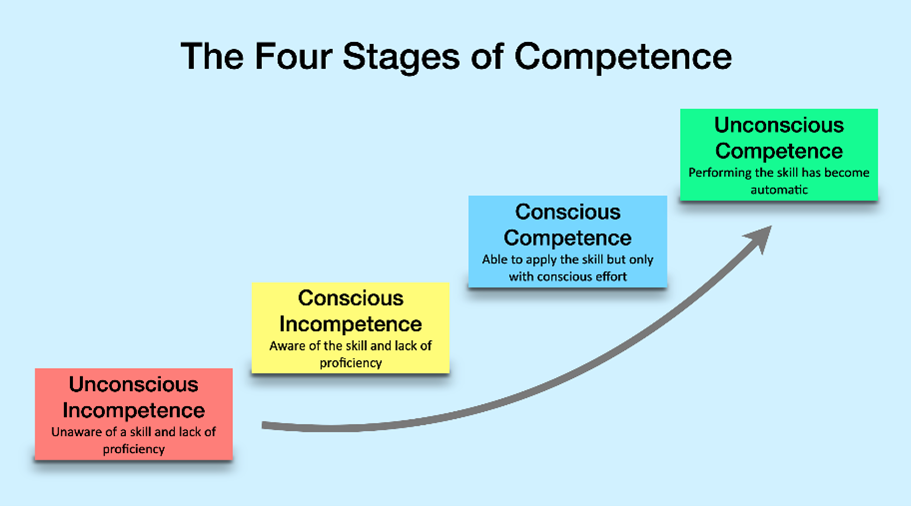
- Unconscious Incompetence – You don’t know what you don’t know.
- Conscious Incompetence – You become aware that you’re not proficient, and that stings.
- Conscious Competence – You can do it, but it requires effort and focus.
- Unconscious Competence – You can do it intuitively and automatically.
When someone is first exposed to Being Side work—especially through tools like my Vertical Development Assessment, Personal Mindset Assessment, or Personal Stagnation Assessment—we’re often moving them from Unconscious Incompetence to Conscious Incompetence. In other words: we’re waking them up to their vertical altitude, and sometimes the view isn’t great.
This can be jarring. And understandably so.
A Real-World Glimpse
Just this past week, I led a development experience for a college within a major university. Over the years, I’ve worked with various universities, and one consistent pattern I’ve seen is this: they rarely invest in the development of their own people. Faculty, staff, and even leaders are often left to figure things out on their own.
So when I walked into this environment, I knew I was inviting people into Being Side work—many for the very first time. I invited them to take my assessments, and the results reflected what I expected: generally low vertical development altitudes.
That’s not a judgment—it’s a reflection of reality. If we’ve never done this kind of internal work, we can’t expect to be far along in it.
And sure enough, as we moved through the session, I began seeing the shift from Unconscious Incompetence to Conscious Incompetence. Some people shut down. Some got defensive. Some denied the data. Others were inspired.
But here’s the thing: all of those responses are signs of progress.
Because now they’re awake. Now they’re aware. And now the real work can begin.
Why So Many Avoid the Being Side
This framework also helps explain why many people—and organizations—steer clear of vertical development altogether.
- Personal Resistance: Facing our own limitations is never fun. The Conscious Incompetence stage is uncomfortable, vulnerable, and at times painful.
- Organizational Fear: Leaders worry that if they invite others into Being Side work, they might upset or destabilize their current culture—or provoke strong emotional reactions.
But what’s the alternative? Staying asleep? Settling for Doing Side fixes that don’t address deeper root causes?
True transformation requires courage—not just to grow ourselves, but to walk others through the messiness of growth as well.
A Way Forward
That’s why I’ve found it powerful to introduce the Four Stages of Competence framework before we begin Being Side work. When people understand that discomfort is part of the process—not a problem—they’re more likely to stay with it.
It doesn’t make the journey easy. But it makes it meaningful.
And for those who are willing to move through the resistance—both in themselves and in their teams—the result isn’t just more competent leadership. It’s elevated consciousness. It’s deeper trust. It’s the kind of transformation that Doing Side training alone could never produce.
Let’s Go There
So let me ask you:
Are you ready to do Being Side work for yourself?
Or are you ready to bring it into your organization?
If so, let’s connect. The discomfort is real—but so is the growth on the other side.