Most leaders respond to rising demands in the same way:
They drive harder.
More urgency. More control. More speed. More pressure. More meetings. More follow-ups. More “we need this by end of day.”
And to be fair—it often works in the short term.
You can get results by pushing. You can create momentum by accelerating. You can muscle through a quarter, a crisis, a big change initiative.
But here’s the problem:
In a complex world, driving harder eventually becomes the thing that slows you down.
Because the issue isn’t effort.
It’s the gear you’re operating in.
The 5th-gear trap
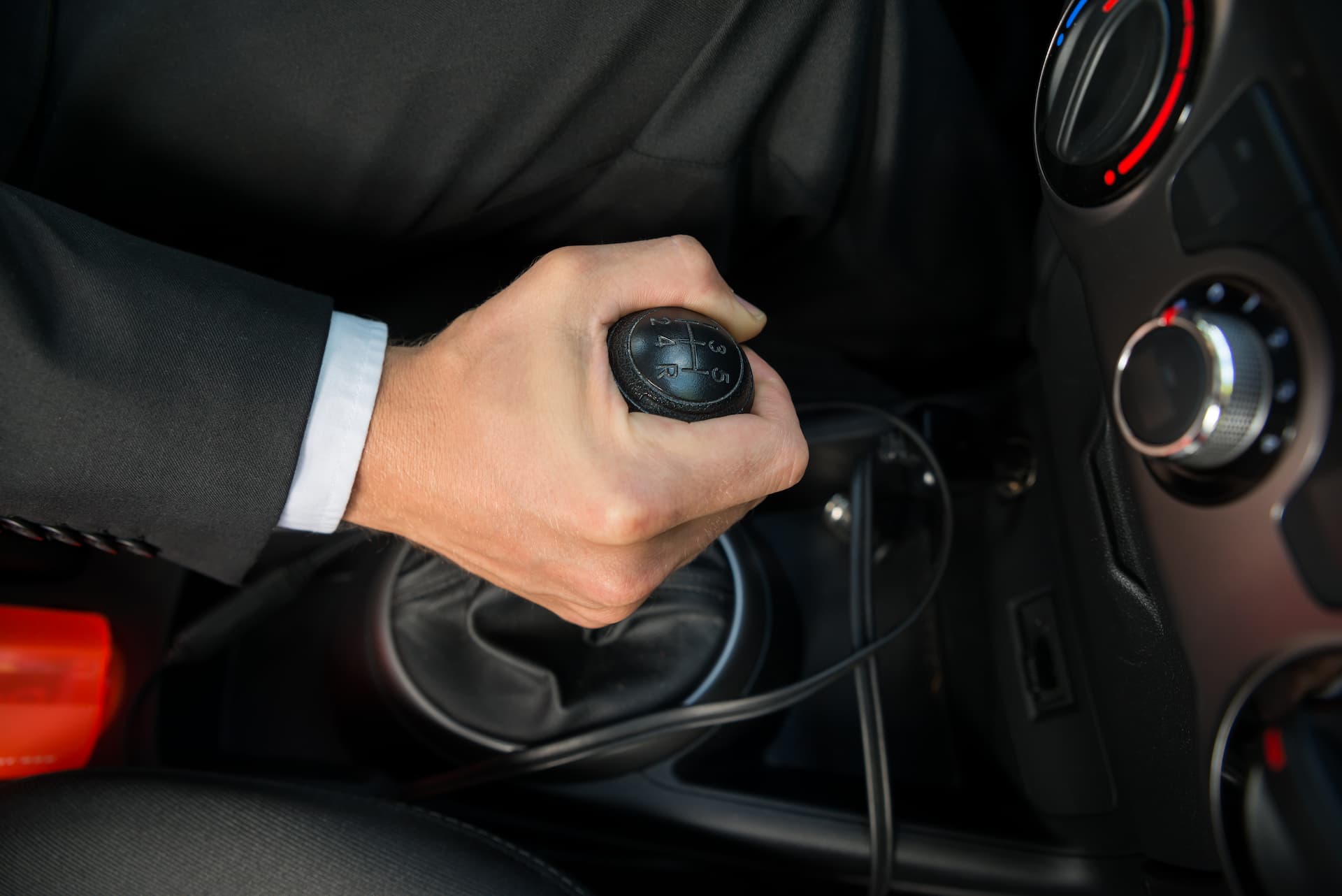
When leaders are in what I call 5th gear (going fast at high RPMs), their leadership is largely driven by:
- urgency (“we need to move faster”)
- control (“I need to make sure this doesn’t go sideways”)
- outcomes (“we have to hit the numbers”)
- short-term wins (“just get it done”)
Again, this isn’t “bad leadership.” It’s often high-performing leadership.
It’s what many leaders were rewarded for on the way up: execution, grit, responsiveness, accountability.
The problem is that 5th gear has a hidden cost.
In complexity, it creates friction.
The friction costs you more than you think
Friction is the invisible tax on performance.
It shows up as:
- decisions that take longer than they should
- misalignment that causes rework
- teams that escalate everything upward
- leaders who become bottlenecks
- conflict that either explodes or disappears underground
- a culture that feels tense, guarded, or burned out
When leaders “drive harder” in 5th gear, they may create motion, but the motion often comes with grinding.
It’s like revving the engine higher to go fast—until you’re generating heat, wear, and breakdown.
And eventually, performance starts to plateau.
Not because people don’t care.
But because the system is carrying too much friction.
Why 5th gear stops working in complexity
Complexity changes the rules.
In complexity:
- speed requires alignment, not force
- agility requires clarity, not pressure
- execution requires ownership, not control
- innovation requires psychological space, not constant urgency
So when leaders respond to complexity by pushing harder, they often get the opposite of what they want:
- urgency reduces clarity
- control reduces ownership
- pressure reduces learning
- speed increases error and rework
- leaders become the “escalation point” for everything
5th gear can still produce results, but it increasingly does so by extracting a cost—on the leader, the team, and the culture.
That’s why it can feel like you’re going faster, while actually getting less traction.
The sign you’re in 5th gear: the leader becomes the bottleneck
Here’s one of the clearest indicators you’re stuck in 5th gear:
People can’t move without you.
Not because you’re a micromanager. Not because you don’t trust people.
But because the environment is pressurized and the system has learned that the safest path is escalation:
- “Just run it by her.”
- “He’ll decide.”
- “We need approval.”
- “Let’s wait until the leader weighs in.”
In 5th gear, leaders often become the stabilizer.
But that stability comes at a cost:
The leader carries too much.
The team learns dependence.
The system slows down.
And paradoxically, the harder the leader drives, the more dependent the system becomes.
The real problem: 5th gear feels like responsibility
Here’s why this is such a trap:
5th gear doesn’t feel like dysfunction.
It feels like leadership.
It feels like:
- being on top of things
- holding the standard
- making things happen
- being accountable
- protecting the organization from risk
So when someone suggests “slow down,” the leader’s nervous system hears:
Danger.
And that’s why many leaders don’t shift gears.
Not because they don’t want to.
But because their identity and wiring are built around being the one who delivers.
A simple self-check
If you want to know whether you’re driving harder in the same gear, ask:
- When demands rise, do I speed up… or create space?
- Do I respond to uncertainty by trying to regain control?
- Do I default to short-term wins even when we need long-term capacity?
- Do people bring me problems they could solve if they had more clarity and ownership?
- Do I feel like I’m carrying too much—and nobody sees it?
If several of these land, you’re likely operating in 5th gear more than you realize.
And again: you’re not alone.
Most leaders have been trained to lead this way.
The good news: the solution isn’t “try harder”
It’s not “work less.” It’s not “care less.” It’s not “lower your standards.”
The solution is to upgrade the operating mode so you can lead complexity without the friction tax.
There is a more advanced gear of leadership—one that allows leaders to:
- reduce urgency without losing speed
- replace control with trust and ownership
- build long-term capacity while still delivering short-term results
- stay curious instead of reactive when tension rises
- become a multiplier instead of a bottleneck
That is 6th Gear Leadership.
I’ll be discussing that more in the upcoming posts.
But, if you recognize 5th Gear Leadership in your organization and want to do something about it, let’s connect.