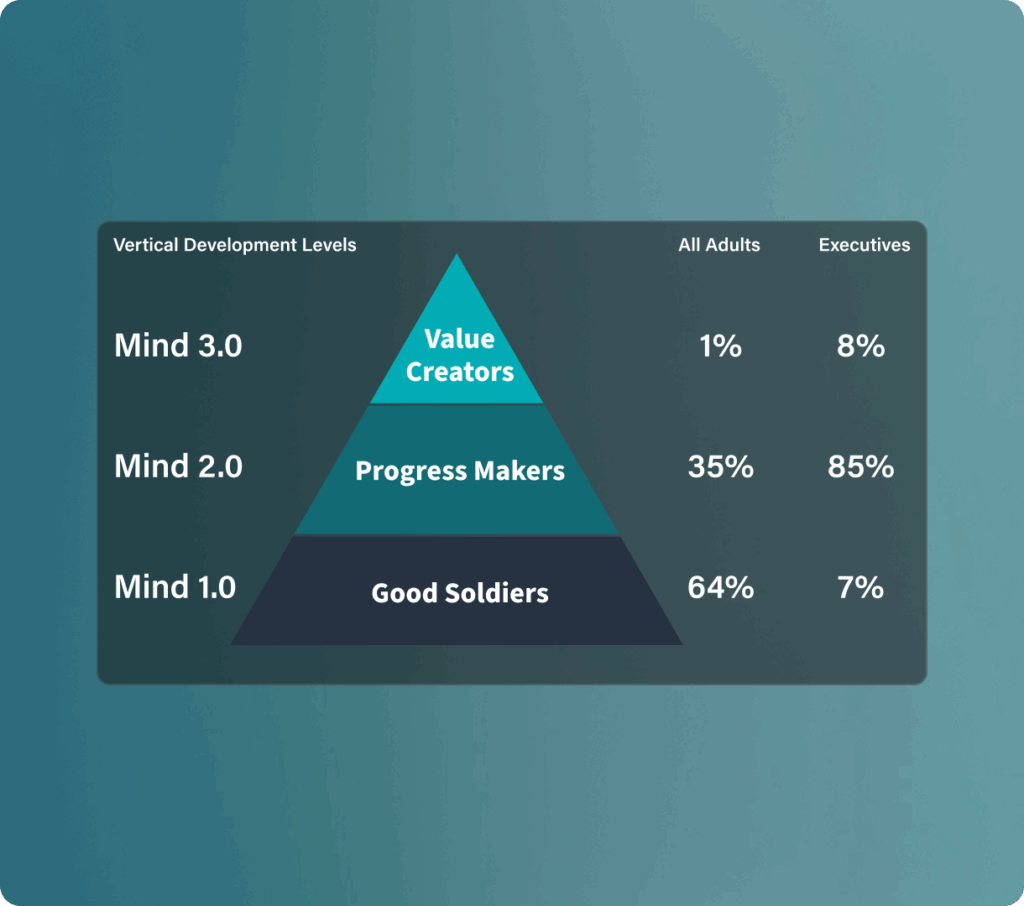
Elevating from one level to a higher level is what is called “Vertical Development.” It’s a developmental shift in how you make meaning, respond under pressure, and lead others.
Did you know:
Leaders operate at one of three levels of sophistication: Mind 1.0, Mind 2.0, or Mind 3.0
The level a leader operates at sets the ceiling for the groups they lead
85% of leaders operate at Mind 2.0
If you can elevate to the Mind 3.0 level, you will unlock transformational impact
How it Works
After completing the Vertical Development Assessment, you will receive a personalized report designed to help you better understand how you currently operate as a leader and what may be possible next. Your report includes:
Your Primary Leadership Level
Discover whether you are most consistently operating from Mind 1.0, Mind 2.0, or Mind 3.0—and what that means for how you lead.
Your Core Leadership Pattern Gain insight into the mindset, motivations, and tendencies that shape how you respond to pressure, pursue goals, relate to others, and create value.
Your Next Development Focus Identify the most important shift you can make to elevate your leadership and operate from a higher gear more consistently.
This assessment measures the sophistication and effectiveness of your internal operating system—your default way of thinking, interpreting, and responding as a leader. In this framework, leaders tend to operate from one of three developmental levels: Mind 1.0, Mind 2.0, or Mind 3.0.
Mind 1.0 is a self-protective way of operating focused on comfort, control, and validation that limits growth and adaptability.
Mind 2.0 is a capable but externally driven way of operating focused on achievement and proving oneself, often at high cost.
Mind 3.0 is a purpose-driven, internally anchored way of operating focused on contribution and sustainable value creation.
While most leaders can move between these levels depending on the situation, they generally have a Center of Gravity—the level that serves as their default and where they spend the greatest percentage of their time. This assessment is designed to identify that Center of Gravity.
TVertical development is not about simply doing more. It is about upgrading the internal operating system that drives how you think, feel, respond, relate, and lead.
1. Understand the Vertical Development Levels Build a foundational understanding of vertical development and the difference between Mind 1.0, Mind 2.0, and Mind 3.0.
2. Awaken to Your Current Vertical Development Level Use the assessment to identify your primary vertical development level and recognize the patterns that are shaping your effectiveness, especially under pressure.
3. Elevate to a Higher Vertical Development Level Engage in intentional developmental practices that help you expand your capacity, increase your agility, and lead from a more elevated internal place.
For Groups - Collective Vertical Development Report
When groups take the Vertical Development Assessment, you get a clear snapshot of your collective center of gravity as a leadership system. This helps you:
See whether culture leans toward self-protection, performance, or contribution
Identify where fear or ego may be holding the organization back
Create a shared language for growth across leaders
Focus development investments on the vertical shifts your leaders and culture most need