
In a recent article titled “When the Past Walks Into the Office”, Susan Schmitt Winchester and Dave Ulrich explores a topic that many leaders and professionals overlook but almost all experience: the invisible ways childhood trauma manifests in the workplace. He outlines nine symptoms that stem from dysfunctional early-life experiences—symptoms that, at first glance, may appear to be simple personality quirks or management challenges, but are in fact echoes of unresolved pain:
- Inability to accept criticism
- Craving for validation
- Emotional outbursts
- Passive-aggressive behavior
- Extreme people-pleasing
- Inconsistent work performance
- Difficulty trusting others
- Overreactions to authority
- Self-sabotage
Reading through this list, many of us will recognize either ourselves or our colleagues. And while it can be tempting to categorize these behaviors as performance issues, they’re more accurately symptoms—manifestations of internal operating systems that were wired under stress, fear, or instability.
Trauma Isn’t What Happened—It’s What Changed Inside Us
Trauma isn’t reserved for those who’ve experienced extreme events. Psychologically, trauma is any overwhelming stress that our system couldn’t process or integrate—especially in childhood. The result? Our nervous systems adapted to help us survive, not thrive. These adaptations hardwire us with internal logic that once protected us but now limits us.
In other words, trauma alters how our body and brain work. It changes our internal operating system—the subconscious patterns that dictate how we interpret feedback, handle conflict, manage risk, or relate to authority. And unless we become aware of these inherited scripts, we unknowingly carry the past into every meeting, every team dynamic, and every leadership decision.
The Workplace as a Mirror
While trauma can occur in the workplace, for most people, the workplace serves more as a revealer of one’s internal operating system deficiencies. Deadlines, power structures, performance reviews, and interpersonal stressors act as mirrors, reflecting back the wiring we developed long ago. For example:
- Someone who avoids conflict at all costs may not lack courage—they may have learned, early on, that expressing disagreement wasn’t safe.
- A leader who micromanages may not be controlling—they may have grown up in chaos, where control was the only source of stability.
- An employee who breaks down after feedback may not be overly sensitive—they may carry a nervous system still wired for threat detection.
These responses make perfect sense when you understand the system driving them. But understanding isn’t enough—we need a path forward.
Rewiring the System: The Path to Transformation
In my work, I refer to these subconscious patterns as our internal operating system. This system is shaped by our mindsets—our semi-conscious lenses that determine how we see the world, others, and ourselves. And if we want to rise above trauma-driven symptoms, we must move beyond surface-level behavior change and into vertical development—the process of upgrading the quality and capacity of our internal operating system.
This kind of transformation doesn’t happen by willpower alone. It requires:
- Awareness of how our internal operating system was formed and how it currently functions.
- Assessment of its current quality—where it’s serving us and where it’s limiting us.
- Direction for how to evolve it—moving from protective wiring toward adaptive growth.
Your Next Step: Becoming Better
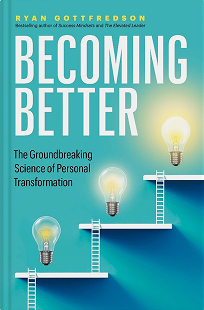
That’s the work I guide readers through in my new book, Becoming Better: The Groundbreaking Science of Personal Transformation. The book offers a science-backed, structured approach to help you:
- Identify the hidden scripts and beliefs embedded in your nervous system
- Understand how trauma, even subtle forms, has influenced your leadership and relational style
- Chart a course to upgrade your internal operating system so you can lead with greater clarity, presence, and resilience
If you saw yourself in any of the nine symptoms above, take it as an invitation—not for judgment, but for growth. You’re not broken. You’re running a system that was built for a different time. It’s time for an upgrade.
Pick up a copy of Becoming Better today, and begin the journey of transformation that will not only change your work—but your life.