Ball Hogs Are Often Really Good
In basketball, the ball hog is usually one of the better players on the floor.
They can score. They can create. When the game gets tight, they want the ball.
Organizations have ball hogs too.
They are the leaders who step in when something important is going wrong. They fix the customer issue. They take over the struggling project. They make the difficult decision.
And usually, they get results.
That is why ball-hog leadership can be so difficult to recognize as a problem.
We Should Probably Expect This
There is a fairly natural reason ball-hog leaders emerge.
Early in our careers, we are rewarded largely for what we personally accomplish. The people who solve problems, take responsibility, and get things done tend to advance.
Then we promote them into leadership roles.
But the way they learned to create value does not automatically change just because their title does.
So, I don’t think the presence of ball-hog leaders necessarily means something has gone wrong. In many ways, it is predictable.
The problem comes when organizations don’t have a strategy for helping these leaders evolve.
When Being Indispensable Becomes a Problem
I have seen versions of this repeatedly.
A division has a leader everyone trusts because they can fix almost anything. When a key customer is upset, they get involved. When a project falls behind, they take over. When an important decision needs to be made, people wait for them.
The organization sees someone who is indispensable.
But that indispensability may be the problem.
When I work with leaders who have these tendencies, they often recognize it themselves. They know they are too involved. They know their people should carry more.
But they also don’t feel like they have much choice.
If they step back, they aren’t confident the result will be good enough.
So, they keep taking the ball.
Results Delivery Is Not Leadership Capability
To me, this is a strong signal of a leader who may be high in Results Delivery but lower in Leadership Capability.
They are capable of getting the result.
What they have not yet developed is the capacity to get strong results while becoming less central to producing them.
Most of these leaders are good people. I often like them personally. Their employees often do too.
But a well-intentioned, high-performing leader can still make a group overly dependent on them.
And this creates a difficult situation for HR and senior leaders. Everyone may see the limitations, but the leader is hitting the numbers. Technically, they are doing what the organization has asked them to do.
So, what do you develop?
Delegation Training Probably Isn’t Enough
The obvious answer is delegation.
But most experienced ball-hog leaders already know they should delegate more.
Their limitation is often deeper.
On the Doing Side, they may know how to delegate, coach, and empower.
The challenge is on the Being Side. They may still see their value as being the person who knows, fixes, decides, or delivers. Under pressure, that is where they naturally return.
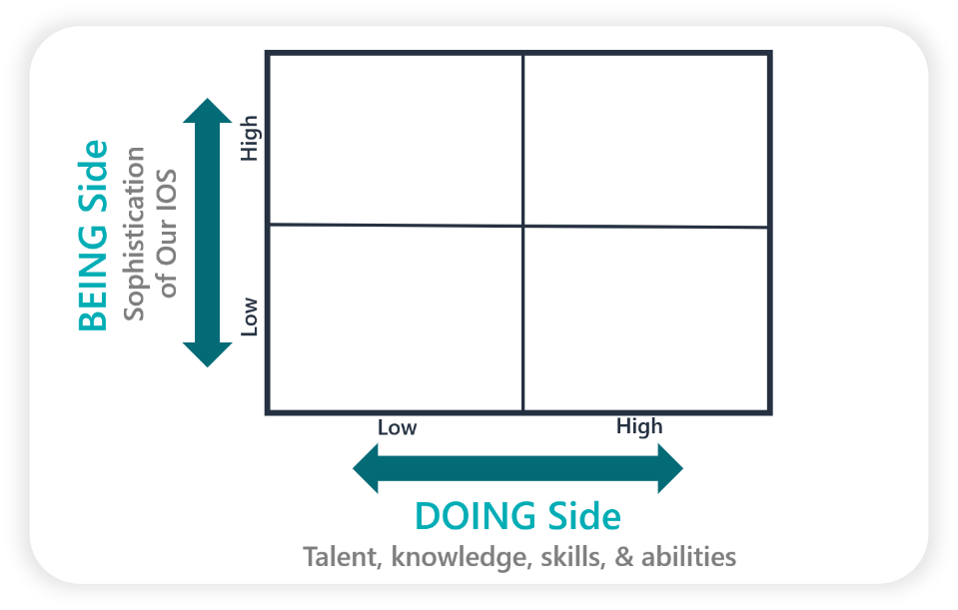
This is why I believe elevating Leadership Capability requires vertical development.
Vertical development helps leaders change not just what they do, but the level from which they operate. It helps them expand how they see their role, how they respond under pressure, and where they believe their value comes from.
The shift is from:
“My value comes from getting the result.”
to:
“My value comes from building the capability that produces the result.”
That is a much bigger developmental shift than learning to delegate.
What Should Organizations Do?
If ball-hog leadership is something we should expect, organizations need to deliberately develop leaders beyond it.
That means not only asking:
Are our leaders delivering results?
But also:
Are they becoming the kind of leaders who make everyone around them more capable?
I am currently developing tools and assessments to help organizations identify leaders who may be producing strong results while remaining overly central to those results—and to better understand where Leadership Capability needs to be elevated.
If that is a challenge you are seeing in your organization and you would like an early look at what I am building, feel free to reach out.